I’ve sat across from hundreds of tired, frustrated adults in my classroom, watching them stare at a practice test score that hasn’t budged in three months. They think they need a more expensive textbook or a fancy new app, but they’re missing the point entirely. Most people treat exam preparation like a marathon where they just run blindly and hope for the best, but if you don’t know exactly how to track progress towards a target score, you’re just running in circles. You aren’t failing because you lack intelligence; you’re failing because you’re measuring the wrong things.
I’m not here to sell you a miracle method or a complex spreadsheet that takes more time to manage than the actual studying. Instead, I’m going to show you how to use my error list method to pinpoint the specific, repetitive mistakes that are actually dragging your grade down. We are going to move away from vague “feelings” about your English and move toward hard, actionable data. By the end of this, you will know exactly which of those twenty common errors you’ve finally conquered and which ones are still costing you marks.
Table of Contents
Using Performance Metrics and Benchmarks to Spot Errors
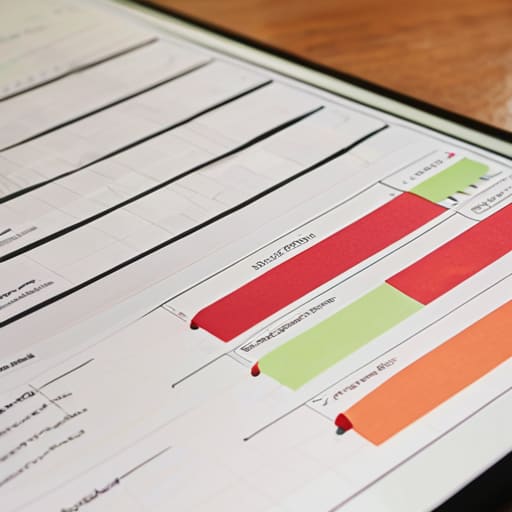
I don’t want you to just “feel” like you’re getting better. In my nineteen years of teaching, I’ve seen too many students rely on a vague sense of confidence right before they hit a plateau. To break through, you need to move toward a quantitative progress assessment. This means you aren’t just looking at a single practice test score; you are looking at the hard numbers behind your errors. If you are consistently losing points on article usage or subject-verb agreement, those aren’t just “bad days”—they are patterns.
By using specific performance metrics and benchmarks, you can stop treating your study sessions like a shot in the dark. I want you to start visualizing score trends across your last five mock exams. Are your writing scores creeping up, or are they flatlining despite the extra hours? When you see that plateau on a graph, it’s time for data-driven goal adjustment. Instead of saying “I’ll study more English,” you say, “I will eliminate these three specific errors from my error list this week.” That is how you turn a habit of failure into a habit of success.
Quantitative Progress Assessment Moving Beyond Gut Feelings
I’ve spent nearly two decades watching students walk into an exam room with nothing but “hope” on their side. They tell me, “I feel like I’m getting better, Anneke,” but feeling isn’t a metric. In my experience, relying on a gut feeling is a dangerous way to prepare for a high-stakes test. To truly know if you are ready, you need a rigorous quantitative progress assessment. You cannot simply tell yourself you are improving; you must prove it with numbers.
This means you need to move away from vague impressions and toward data-driven goal adjustment. If your mock scores for Writing have plateaued at a 6.0 for three consecutive weeks, no amount of “feeling confident” will push you to a 7.0. You need to look at the hard data to see if those recurring errors from my list are still haunting your output. By monitoring achievement milestones—such as your ability to use complex structures without error in a timed setting—you turn a nebulous goal into a visible, measurable climb. Stop guessing and start measuring.
Five Ways to Stop Guessing and Start Measuring
- Keep an error log for my “Top Twenty.” Don’t just tick a box saying you did a practice test; write down exactly which of those recurring mistakes popped up. If you see the same error in your third mock exam as you did in your first, you aren’t progressing, you’re just practicing bad habits.
- Track your “Time-to-Accuracy” ratio. It isn’t enough to get the answer right if it takes you ten minutes to parse a single reading passage. I want to see if you are reaching the correct answer faster over time, or if you’re still struggling with the same linguistic hurdles.
- Use a “Mistake Frequency” spreadsheet. Instead of looking at your overall percentage—which can be incredibly deceptive—track how many times you trip over specific grammar points or collocation errors. A jump from 70% to 75% means nothing if those five extra marks are being lost to the same three predictable errors.
- Audit your “Near Misses.” When you get a multiple-choice question wrong, don’t just look at the correct answer and move on. Write down why the wrong answer looked tempting. Was it a vocabulary slip or a structural misunderstanding? This tells me if your progress is actually stabilizing.
- Schedule “Diagnostic Sprints” rather than marathon study sessions. Every two weeks, take a targeted mini-test that focuses only on your weakest areas. If you’ve been working on articles for a month, your metrics should show a measurable drop in article errors, not just a vague feeling that you “know them better now.”
The Path from Data to Mastery

At this stage, you should see that tracking your progress isn’t about obsessing over every single minor slip-up; it is about identifying the patterns. By moving away from vague “gut feelings” and instead utilizing hard metrics and benchmarks, you can finally see the difference between a random error and a systemic habit. Remember, my goal isn’t for you to be perfect, but for you to be strategically accurate. If you can use your performance data to isolate those recurring errors that consistently drain your marks, you are no longer just studying—you are engineering your success.
I know how exhausting this process can feel, especially when you are balancing a full-time job or family commitments alongside your studies. There will be weeks where the scores plateau or even dip, but please, do not let that discourage you. Think of it like learning a complex choral piece; you don’t master the harmony on the first read-through, but through repetition and careful correction, the notes eventually become second nature. Keep your eyes on the data, stay disciplined with your error logs, and trust that consistent, measured adjustments will eventually lead you to that target score. You have the tools; now, simply trust the process.
Frequently Asked Questions
I’m already tracking my scores, but how do I know if a sudden dip is just a bad day or a sign that I've picked up a new habit I need to break?
Look, I’ve seen this a hundred times. One bad mock exam and suddenly you think you’ve regressed. Don’t panic. If it’s a one-off, it’s likely just fatigue or a bad night’s sleep. But if that dip is accompanied by the same recurring error from my “Top Twenty” list, you’ve likely automated a mistake. Check your error patterns: if the error repeats across different tasks, it’s not a bad day—it’s a new, dangerous habit.
Should I be focusing more on my overall percentage increase, or is it better to track how many of my "top twenty" mistakes I'm actually avoiding?
Focus on the mistakes. An overall percentage can be deceptive; you might jump from 60% to 70% simply because you got lucky with the vocabulary in one specific text. That doesn’t mean you’ve mastered the language. I want to see that your “top twenty” error list is shrinking. If you stop making those specific, costly blunders, the score increase will follow naturally. Track the habits, not just the numbers.
If my scores have plateaued for three weeks straight, does that mean my tracking method is broken, or am I just hitting a wall in my learning?
It is rarely your tracking method that’s broken; it’s usually your focus. A plateau doesn’t mean you’ve stopped learning, but it does mean your current habits have reached their limit. You aren’t hitting a wall; you’re hitting a ceiling of repetitive errors. Stop looking at the total score for a moment and look at the data. Are those same twenty mistakes still appearing in every single practice test? If so, that’s your answer.
