Stop paying for expensive conversation clubs or hunting down native speakers in coffee shops just to get a few minutes of practice. It’s a massive waste of time and, frankly, it’s inefficient. I’ve sat across from hundreds of adult learners who think they need a social life to pass an exam, but the truth is that most of them are just performing rather than actually training. If you want to know how to practise speaking without a partner, you need to stop looking for a person and start looking at your own habits. Most of the marks lost in speaking exams aren’t because of a lack of “flow,” but because of the same repetitive errors that I’ve seen more than fifty times in my nineteen years of teaching.
I am not here to give you vague, academic theories or tell you to “just immerse yourself” in movies. I’m going to give you a structured, no-nonsense toolkit for solo training that actually works. We are going to focus on the specific mechanics of speech that examiners look for, turning your solitary study time into a high-impact rehearsal. I promise to show you exactly how to identify your own mistakes so you can stop losing marks on things you could have fixed months ago.
Table of Contents
Mastering Shadowing Technique for Language Learning
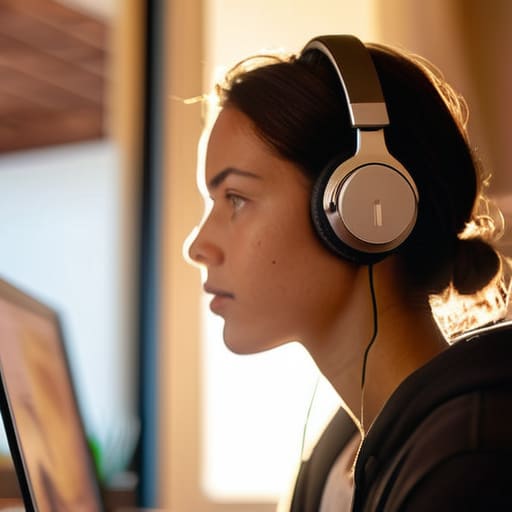
If you want to stop sounding like a textbook and start sounding like a human, you need to master the shadowing technique for language learning. I see so many students stumble during the speaking exam because their rhythm is “staccato”—they hit every word with the same heavy force. Shadowing fixes this. Find a recording of a native speaker—something clear, like a TED Talk or a news clip—and repeat what they say as they are saying it. Don’t wait for them to finish the sentence; you are their shadow. You are chasing their intonation, their pauses, and those tiny, subtle connections between words that most learners completely ignore.
This isn’t just about mimicry; it’s about building muscle memory. When you are improving pronunciation alone, you are essentially training your mouth to move in ways it isn’t used to. I often tell my students to focus on the musicality of the sentence rather than just the individual sounds. If you find yourself tripping over a specific phrase, don’t just move on. Slow it down, repeat it ten times, and then try to catch up to the original speed. It’s tedious, yes, but that is exactly how you turn a conscious rule into a natural habit.
Using Voice Memos for Fluency and Correction

If you want to stop losing marks on fluency, you need to stop being your own most lenient examiner. Most of my students think they are speaking clearly until they actually hear themselves played back. This is where using voice memos for fluency becomes a game-changer. I want you to record yourself tackling a specific exam prompt—not just a casual chat, but a formal monologue. When you listen back, don’t just listen for the “vibe”; listen for those recurring grammatical slips that I’ve seen a thousand times, like subject-verb disagreement or those pesky dropped articles.
This isn’t just about catching errors; it’s about building language learning autonomy. When you listen to your recording, you’ll notice the awkward pauses or the “umms” that break your flow. Try recording the same response three times in a row. Each iteration should be slightly smoother than the last. By treating your phone like a digital mirror, you move away from passive listening and into active, targeted correction. It’s the most efficient way to bridge the gap between knowing the rule and actually using it under pressure.
Five Ways to Stop Making "Silent" Mistakes
- Narrate your day like a documentary. I see so many students who have the vocabulary but lack the “muscle memory” to string sentences together quickly. As you move through your kitchen or get ready for work, describe your actions out loud. It forces your brain to bridge the gap between thinking and speaking without the pressure of an examiner watching you.
- Use the “Question-Answer” loop. Most people fail because they give one-word answers that kill their fluency score. When you practice alone, pose a complex question to yourself—something like, “What are the pros and cons of remote work?”—and then force yourself to answer using a structure like ‘On the one hand… however…’ This builds the habit of extended discourse.
- Record, listen, and transcribe. This is painful, I know, but it’s necessary. Don’t just listen to your voice memos to hear your accent; listen for those repetitive grammatical slips I keep in my error list. If you hear yourself say “he go” instead of “he goes” three times in one minute, you aren’t just making a mistake; you’re building a bad habit that will cost you marks.
- Read aloud with exaggerated emotion. In my nineteen years of teaching, I’ve noticed that “flat” speakers struggle with the intonation requirements of higher-level exams. When you read a text alone, don’t just drone on. Over-emphasize the stressed syllables and the emotional shifts. If you sound like a robot in your living room, you’ll sound like a robot in the exam hall.
- Practice “Timed Monologues.” One of the biggest killers of a good score is the sudden panic when the clock starts. Set a timer for exactly 60 or 90 seconds and speak on a random topic until the bell rings. This trains your brain to manage its pace and prevents that awkward silence that happens when you run out of things to say halfway through a prompt.
Don't Wait for a Partner to Start Improving

Let’s be realistic: waiting for the “perfect” study partner is often just a sophisticated way of procrastinating. We have covered how shadowing can sharpen your rhythm and how voice memos turn your phone into a private, judgment-free tutor. These aren’t just supplementary exercises; they are the tools that bridge the gap between knowing a rule and actually using it as a habit. If you can master the mechanics of your own speech through these methods, you won’t be caught off guard when you finally sit in that exam chair. Remember, the goal isn’t to sound like a textbook; it is to eliminate those repetitive errors that bleed your score dry before you’ve even finished your first sentence.
I know how frustrating it feels to study for hours only to feel like your tongue is tied in knots during a speaking test. But I have seen thousands of students move from hesitation to fluency simply by taking ownership of their own practice. You don’t need a classroom or a conversation partner to build the muscle memory required for success. You just need consistency and the discipline to face your own voice. Stop overthinking the complexity of your drills and just start making noise. You have the tools, you have the plan, and I promise you, the marks are well within your reach if you start practicing today.
Frequently Asked Questions
If I'm shadowing a recording, how do I know if I'm actually improving my pronunciation or just mimicking sounds without understanding them?
That is the million-dollar question. If you’re just mimicking sounds like a parrot, you aren’t learning; you’re just performing. To ensure you’re actually improving, you must bridge the gap between sound and meaning. After shadowing a segment, pause the recording and try to paraphrase what was said in your own words. If you can’t explain the meaning behind the sounds you just made, you’re just playing a game of echoes. Don’t just copy the rhythm; own the message.
I've tried recording voice memos, but I always feel awkward listening back to myself; is there a way to do this without getting discouraged?
I hear you. Honestly, I felt the same way when I first started recording my choral rehearsals—it’s cringeworthy. But listen: if you avoid the recording because it feels awkward, you’re choosing comfort over progress, and that’s exactly how marks are lost. Don’t listen to the whole thing at once. Pick just thirty seconds. Find one specific error—maybe a repeated “um” or a tense slip—fix it, and stop. Treat it like a diagnostic, not a performance.
When I'm practicing alone, how can I make sure I'm not just reinforcing the same grammatical errors I always make?
This is exactly why I keep my “list of fifty” errors. If you just repeat yourself without a filter, you aren’t practicing; you’re just perfecting your mistakes.
