I can still see them clearly: rows of exhausted adults in my classroom, pens hovering over papers, eyes darting frantically between the audio and the diagrams. I remember one student, a brilliant professional, who nearly broke down in tears because she felt she “wasn’t good at directions.” She wasn’t bad at directions; she just hadn’t been taught how to approach a listening map or diagram task with a systematic method. She was trying to listen to every single word like it was a poem, rather than treating the map like a strategic puzzle that needs to be solved before the audio even begins.
I’m not going to give you a list of fancy vocabulary words or tell you to “just listen harder”—that’s useless advice that wastes your time. Instead, I am going to show you the exact, structured steps I’ve taught for nineteen years to ensure you don’t fall into the same traps my students used to. We are going to focus on the habits that actually earn marks, cutting through the noise so you can navigate those maps with absolute precision.
Table of Contents
Why Poor Spatial Awareness for Listening Exams Costs You Marks

The problem isn’t that you don’t understand English; it’s that you aren’t looking at the paper the way the examiner expects you to. Many of my students come to me with high vocabulary scores but fail the map tasks because they lack basic spatial awareness for listening exams. They treat the diagram like a static picture rather than a living path. When the audio starts moving, they get lost because they haven’t mentally prepared to “walk” through the space.
If you can’t visualize the movement, you’ll miss the turn. I see it constantly: a student hears “the cafe is opposite the library” and they freeze because they haven’t practiced identifying landmarks in listening tasks beforehand. You aren’t just listening for words; you are tracking a trajectory. If you lose your place for even three seconds, the entire sequence collapses. You end up chasing the audio, trying to catch up to a destination that the speaker has already passed, and that is exactly how those precious marks slip through your fingers.
The Trap of Missing Key Landmarks in Listening Tasks

I see this happen in almost every single exam session: a student is staring at the map, their pen poised, but they are completely lost because they failed to anchor themselves. They treat the map like a picture rather than a set of instructions. The trap is simple. You focus so hard on the specific labels you’re looking for that you forget to look at the “big” things first. If you aren’t identifying landmarks in listening tasks—the fountain, the main entrance, the large oak tree—you are essentially sailing without a compass.
Without those fixed points, the speaker’s directions become a blur of “left” and “right” that leads you straight into a dead end. I’ve seen too many candidates lose their way because they didn’t realize the speaker had pivoted 180 degrees. You must use the landmarks to orient your mental image of the space. If you don’t establish your starting position immediately, all the sophisticated map labeling techniques in the world won’t save you from a score that reflects pure guesswork.
Five Habits to Stop the Bleeding of Marks
- Stop reading the labels and start tracing the paths. I see so many students get stuck reading the names of the rooms, but the audio is going to talk about the movement between them. Use your pencil to physically trace the route the speaker is describing; if your pencil is moving, your brain is following.
- Master your prepositions before the audio starts. In my nineteen years, I’ve realized that “next to” and “opposite” are where the marks go to die. If you aren’t 100% certain of the spatial difference between “adjacent to” and “across from,” you are gambling with your score.
- Don’t fall for the “First Mention” trap. Examiners love to name a landmark early just to throw you off. They’ll say, “We used to have a cafe by the fountain,” but the question is about where the cafe is now. Listen for the tense shifts; they are the breadcrumbs to the correct answer.
- Use the compass points as your anchor. If the map has a North arrow, treat it like law. I’ve seen candidates lose marks because they confused “left” and “right” when the speaker turned around. Always orient yourself to the cardinal directions provided on the page.
- Anticipate the “directional” language. Before you press play, scan the diagram for any potential obstacles or turns. If you see a winding path, prepare your ears for words like “veer,” “bend,” “loop,” or “straight ahead.” If you aren’t expecting the turn, you’ll miss the destination.
Don't Let a Map Become Your Downfall
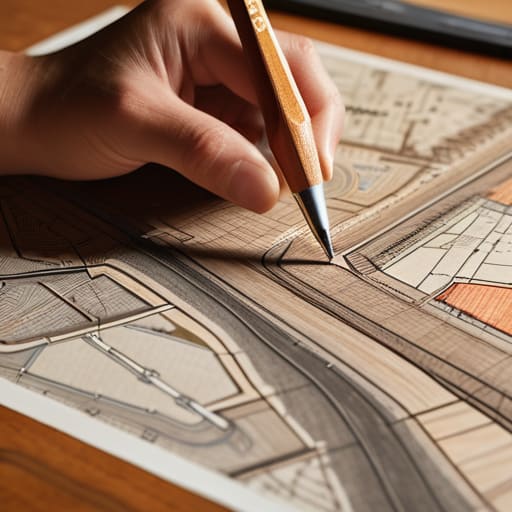
At the end of the day, these tasks aren’t actually testing your ability to navigate a physical space; they are testing your ability to translate spoken language into visual orientation. If you haven’t identified your starting point, if you’ve ignored the cardinal directions, or if you’ve let the speaker’s pace leave you scrambling to find a landmark you missed three sentences ago, you are effectively handing those marks over to the examiner. Remember: stay ahead of the audio, keep your pencil moving, and never—under any circumstances—lose sight of your anchor point.
I know how frustrating it feels to hear the answer in your head but realize your pencil is pointing to the wrong corner of the page. I’ve seen it hundreds of times in my nineteen years of teaching. But here is the truth: these errors are not failures of intelligence, they are simply failures of habit. Once you train your brain to anticipate the spatial shifts before they happen, the map stops being a maze and starts being a roadmap to your target score. You have the tools; now, go out there and practice with purpose.
Frequently Asked Questions
What should I do if the speaker uses a direction that isn't clearly marked on the map provided?
This is where panic sets in, and panic is the enemy of the marks you’ve worked so hard for. If the speaker mentions a direction that feels “off” compared to the map, don’t freeze. Re-orient yourself immediately. They might be describing the view from a landmark rather than the landmark itself. Stop trying to force the word onto the wrong spot; instead, look for the next anchor point and reset your mental compass.
How can I keep track of my position on the diagram without losing focus on the actual audio?
This is where many of my students stumble. They get so caught up in “drawing” their way through the map that they stop listening. My advice? Use your pencil as a physical anchor. Don’t just look at the diagram; keep your pencil tip resting on the landmark mentioned. As the speaker moves, slide your pencil along the path. This tactile connection keeps your eyes on the route without requiring you to look away from the audio.
Is it better to write down the labels immediately, or should I wait until the speaker finishes the entire sequence?
Don’t wait until the end. If you try to hold the entire sequence in your head, you’ll lose your place and miss the next landmark. However, don’t get so caught up in scribbling long words that you stop listening. My advice? Jot down short, sharp keywords or even simple symbols immediately as they are mentioned. This keeps your pen moving and your ears open. Speed and brevity are your best friends here.
