Stop wasting your money on those expensive “accent reduction” apps that promise you’ll sound like a BBC newsreader in a week. Honestly, it’s a scam. I’ve sat in exam rooms for nineteen years, watching brilliant, highly educated professionals fail their speaking components not because they lack vocabulary, but because they are obsessing over the wrong things. They spend months trying to master every subtle nuance of a dialect, when they really just need to know how to improve pronunciation of difficult sounds that actually impact intelligibility. If you can’t distinguish a ‘v’ from a ‘b’ under pressure, no amount of fancy software is going to save your score.
I’m not here to give you a theoretical lecture on phonetics; I’m here to give you the practical shortcuts I’ve gathered from nearly two decades of grading. I have a running list of the specific phonetic traps that cost my students their marks, and we are going to tackle them one by one. My promise to you is simple: no fluff, no wasted time, and no unnecessary complexity. We are going to focus on the specific habits that turn a passing grade into a high score.
Table of Contents
Mastering Mouth Positioning for Speech to Fix Errors
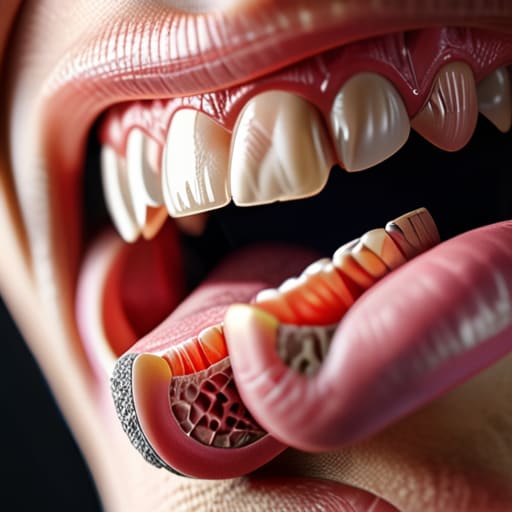
Most of my students approach pronunciation like they are trying to solve a math equation, but you cannot think your way into a better accent. You have to physically train your muscles. If you are struggling with those tricky dental fricatives or the dreaded “th” sounds, the issue isn’t your brain—it’s your anatomy. You need to focus on mouth positioning for speech with the same discipline I use when practicing a difficult choral arrangement. If your tongue is even a millimeter too far forward, the sound collapses, and you lose the mark.
I don’t believe in vague advice. I want you to treat your mouth like an instrument. Instead of just listening to audio, I recommend incorporating specific speech articulation drills into your daily routine. Don’t just mimic the sound; observe exactly where your teeth meet your lip and how much air is escaping. If you aren’t consciously adjusting the tension in your jaw, you are simply repeating the same errors that have been on my list for nineteen years. Stop guessing and start measuring.
Auditory Discrimination Skills Hearing What Youre Missing
You cannot produce a sound you cannot actually hear. This is the most frustrating pattern I see in my classroom: students spend hours on speech articulation drills, moving their tongues and lips precisely, yet they still produce the same errors. Why? Because their ears are still filtering the language through their native phonetic lens. If your brain thinks “ship” and “sheep” are the same sound, no amount of physical practice will fix the mistake. You have to develop your auditory discrimination skills before you even attempt to speak.
I often tell my students to stop focusing on how they look in the mirror and start focusing on “ear training.” I recommend using minimal pair exercises—words that differ by only one single sound—to force your brain to recognize the distinction. It’s not about mimicking an accent; it’s about training your brain to perceive the subtle shifts in frequency and duration. Until you can hear the difference between a voiced and unvoiced consonant in a stream of natural speech, you are essentially flying blind. You must learn to listen for the gaps.
Five Habits to Break Before Your Next Exam
- Stop treating pronunciation as a “feeling” and start treating it as a physical drill. If you can’t explain where your tongue is sitting during a /θ/ sound, you haven’t mastered it; you’re just guessing.
- Record yourself reading exam-style passages, then listen back specifically for those “ghost sounds”—the consonants you’re dropping at the ends of words because you’re rushing to finish the sentence.
- Focus on word stress, not just individual sounds. You can get every vowel right, but if you put the emphasis on the wrong syllable, an examiner will struggle to follow your logic, and that’s where the marks vanish.
- Use minimal pairs to sharpen your focus. Don’t just practice “ship” and “sheep” once; drill them until the distinction is so sharp that your brain can’t confuse them even when you’re under the pressure of a timer.
- Slow down your tempo to prioritize clarity over speed. Many of my students think speaking fast equals fluency, but in an exam, clarity is king. A steady, controlled pace prevents the phonetic collapses that kill your score.
Making the Correction Stick
We have covered a lot of ground today, but let’s be clear: knowing the theory is not the same as having the habit. You cannot simply read about where your tongue should sit and expect your mouth to obey during a high-pressure exam. You must bridge that gap by mastering your physical positioning and, crucially, training your ears to catch the errors before they even leave your lips. If you don’t fix these foundational mechanics, you are essentially building a house on sand. Remember, my goal isn’t to make you sound like a BBC newsreader; it is to ensure that these specific, recurring errors stop costing you marks on your results sheet.
I know that staring at a list of phonetic errors can feel overwhelming, especially when you have spent years speaking one way. But I have seen students—adults with full-time jobs and families—transform their scores by focusing on these precise adjustments. It isn’t about perfection; it is about deliberate practice. Don’t try to overhaul your entire accent overnight. Instead, pick one sound, master the muscle memory, and move to the next. If you approach this with the same discipline I bring to my choral rehearsals, you will find that clarity is well within your reach. You can do this.
Frequently Asked Questions
I've mastered the mouth positioning, but how do I stop my tongue from slipping back into old habits mid-sentence?
This is exactly where the “habit” part of my manifesto comes in. You can know the theory, but your muscles have nineteen years of memory. To stop that slip, you must stop practicing full sentences immediately. You’re overextending. Instead, use “over-exaggerated drilling.” Say the target sound in isolation, then in pairs, then in short clusters. Build the muscle memory in small, controlled bursts before you dare to tackle a long paragraph. Control the micro, then the macro.
If I can hear the difference between the sounds now, how do I actually bridge that gap to producing them clearly under exam pressure?
That gap is where most students crumble. You can hear the difference in a quiet room, but the exam hall is a different beast. To bridge it, you must move from recognition to muscle memory. Stop practicing sounds in isolation; start practicing them in high-speed, high-stress sentences. I want you to over-exaggerate the movements until they feel ridiculous. If your jaw doesn’t feel slightly tired, you aren’t working hard enough to build that habit.
Should I be focusing on individual tricky sounds one by one, or is it better to practice through full sentences to maintain my rhythm?
You’re asking the right question, but don’t fall into the trap of choosing just one. If you only drill isolated sounds, you’ll sound like a robot; if you only practice sentences, you’ll just polish your existing mistakes. My rule? Master the mechanics of the individual sound first until it’s muscle memory. Once that’s solid, immediately move it into full sentences. You need the precision of the sound and the flow of the rhythm.
