I’ve sat across from hundreds of adult learners, some of them professionals with decades of experience, who look absolutely defeated by a pile of old exam booklets. They think that if they just sit there and grind through ten years of practice tests, the marks will magically appear. But let me tell you: most students are just performing a hollow ritual of “studying” without actually learning anything. If you think that brute-force repetition is the secret to how to use past papers properly, you are merely polishing the brass on a sinking ship. You aren’t building skill; you’re just practicing how to fail more efficiently.
I’m not here to give you a vague academic lecture or tell you to “study harder.” My promise to you is much more surgical. I am going to show you how to treat these papers as diagnostic tools to hunt down that specific list of errors I’ve been compiling for nineteen years. We are going to move away from mindless scrolling and toward a structured, habit-breaking approach that targets the mistakes that actually cost you the grade. No fluff, no hype—just the exact method I use to ensure my students stop leaking marks.
Table of Contents
Mastering Active Recall With Past Papers

Most students treat past papers like a reading exercise, skimming through questions to see if they “get it.” That is a recipe for disaster. If you want real results, you need to embrace active recall with past papers. This means closing your textbook, sitting in a quiet room, and forcing your brain to retrieve the information from scratch. It’s uncomfortable, and it’s supposed to be. That mental strain is exactly where the learning happens.
I always tell my students that if you aren’t struggling slightly, you aren’t studying; you’re just performing a rehearsal of what you already know. Use these papers for identifying knowledge gaps rather than just confirming your strengths. When you get a question wrong, don’t just glance at the answer. Go back to the grammar rule, find the error in your logic, and write it down in your mistake log. We aren’t just looking for the right answer; we are training your brain to stop making those repetitive, costly errors under pressure.
Identifying Knowledge Gaps Before They Cost You Marks
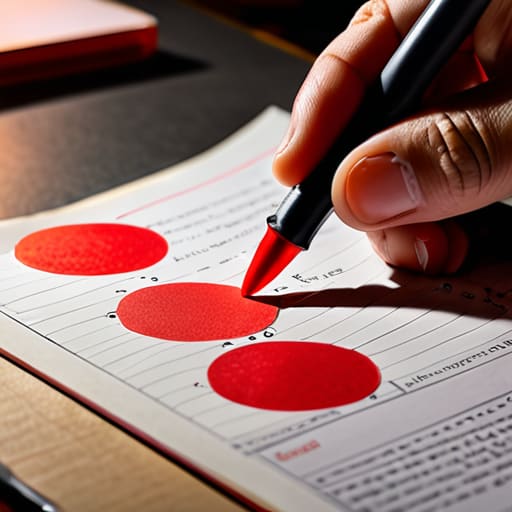
Don’t just tick off a paper and move on; that is the fastest way to ensure you repeat the same errors in the actual exam. When I sit with my students, I tell them that a past paper isn’t a test of what they know, but a diagnostic tool for what they don’t. If you find yourself consistently stumbling over the same conditional structures or article usage, you haven’t “finished” that paper—you’ve just identified a leak in your ship. You need to be ruthless here. Identifying knowledge gaps is about looking at the red ink and being honest about why it’s there.
Once you spot these patterns, stop the mindless repetition. If you keep practicing what you’re already good at, you’re just polishing a mirror while the rest of the house is on fire. Instead, take those specific weak points and feed them into a spaced repetition study method. If you missed a question on passive voice, don’t just read the rule once; revisit it, apply it, and test it again in three days. This is how you turn a recurring mistake into a permanent habit of correctness.
Five Ways to Stop Treating Past Papers Like a Safety Blanket
- Stop checking the answer key mid-sentence. If you peek at the solution the moment you feel stuck, you aren’t practicing retrieval; you’re just practicing reading. You have to sit in that uncomfortable silence of not knowing. That’s where the actual learning happens.
- Time yourself, but do it brutally. I see so many students who can finish a paper in four hours at their kitchen table, only to panic when the exam clock hits the two-hour mark. Mimic the pressure of the exam hall, not the comfort of your living room.
- Treat the mark scheme like a legal document. Don’t just look at whether your answer was “right” or “wrong.” Look at the specific keywords the examiners demand. If the mark scheme requires “consequently” and you wrote “so,” you need to understand why that distinction matters for your score.
- Grade your own work with a heavy hand. Most students are far too kind to themselves when reviewing their mistakes. I want you to be as pedantic as a grumpy examiner. If you wouldn’t give that sentence to a student, don’t give it to yourself.
- Analyze your error patterns, not just your scores. Don’t just say, “I got 60%.” Ask yourself, “Did I lose those marks because of grammar slips, or because I didn’t understand the prompt?” If you don’t categorize your mistakes, you’ll just repeat them in the real exam.
Stop Practicing, Start Preparing
Let’s be clear: there is a massive difference between “doing” a past paper and actually using it to fix your English. If you are just ticking off questions to feel productive, you are falling into the same trap I see every single year. You must move beyond mere familiarity. Use those papers to trigger active recall, pinpoint exactly where your grammar habits are failing you, and—most importantly—use them to hunt down those recurring errors before the examiner does. It isn’t about how many papers you finish; it is about how much you learn from every single mistake you make under timed conditions.
I know how exhausting this process feels. I’ve sat across from hundreds of students who felt like they were hitting a brick wall, no matter how much they studied. But remember, exam English is a game of habits, and habits can be rewritten. Don’t let the fear of a wrong answer stop you from diving into the deep end. Treat every incorrect response as a roadmap to your success rather than a failure. You have the tools, you now have the strategy, and I have seen it work for countless others. Now, stop reading about it and go get to work.
Frequently Asked Questions
Should I be timing myself from the very first practice paper, or is that just a recipe for panic?
Don’t you dare start the stopwatch yet. If you time yourself on day one, you aren’t practicing English; you’re just practicing panic. You’ll rush, make those same twenty predictable mistakes I’m always hunting for, and walk away feeling defeated. First, focus on accuracy and building the right habits. Once the mechanics feel second nature, then—and only then—do we bring in the timer to simulate the pressure. Build the skill before you test the speed.
How do I stop myself from just reading the marking scheme and pretending I've learned the answer?
I see this constantly. You read the marking scheme, think, “Ah, that makes sense,” and your brain checks a box. That isn’t learning; it’s just recognition. To stop this, you must close the scheme immediately. Take a blank sheet of paper and reconstruct the answer from scratch. If you can’t reproduce the structure and the specific vocabulary without looking, you haven’t learned it—you’ve just memorized the feeling of understanding.
If I keep making the same errors from your list, at what point do I stop doing papers and go back to the grammar books?
Look, I see this panic often. If you’re hitting the same errors from my list in every single paper, you aren’t “testing” anymore—you’re just practicing failure. Stop the papers immediately. You cannot build a house on a cracked foundation. Go back to the grammar books, master the mechanics, and rebuild those habits. Once you can explain why the rule exists, only then do you return to the exam papers to test your discipline.
