Stop wasting your weekends highlighting entire chapters of a textbook and praying for a miracle. I see it every single year: bright, capable students sitting for their exams, only to freeze because they tried to memorize a dictionary instead of focusing on what actually matters. They think that if they just cram more words into their heads, they’ll succeed, but that’s a lie. If you want to know how to learn topic vocabulary quickly, you have to stop treating English like a memory test and start treating it like a set of tools. Most of the “advanced” words you’re sweating over won’t even appear in the prompts, while the essential ones slip right past you.
I’m not here to give you a lecture on linguistic theory or suggest expensive, flashy apps that promise the world. My approach is much more practical. I’m going to show you how to identify the specific clusters of words that actually show up in exam papers, so you can stop losing easy marks on things like “Environment” or “Technology.” I’ll give you the exact, no-nonsense method I’ve used with my adult students for nineteen years to build a vocabulary that actually works under pressure.
Table of Contents
Mastering Thematic Word Grouping Methods Instead of Lists

I see it every single exam season: a student sits there with a notebook filled with three pages of disconnected nouns and verbs, all scribbled in a frantic attempt to memorize a single topic. They think they’re studying, but they’re actually just building a graveyard of words they’ll never be able to retrieve under pressure. If you want to stop losing marks, you have to stop treating vocabulary like a shopping list. Instead, you should be using thematic word grouping methods to see how words actually live together.
When I teach my students, I insist they move away from the “one word, one translation” trap. If you are studying “The Environment,” don’t just write down pollution. You need to see the relationships: carbon emissions, toxic runoff, and biodiversity loss. By using semantic mapping for word acquisition, you create a mental web rather than a straight line. This way, when the exam question triggers one concept, the entire network of related terms is pulled into your conscious mind. It’s about building a system, not just a memory.
Using Semantic Mapping for Word Acquisition Success
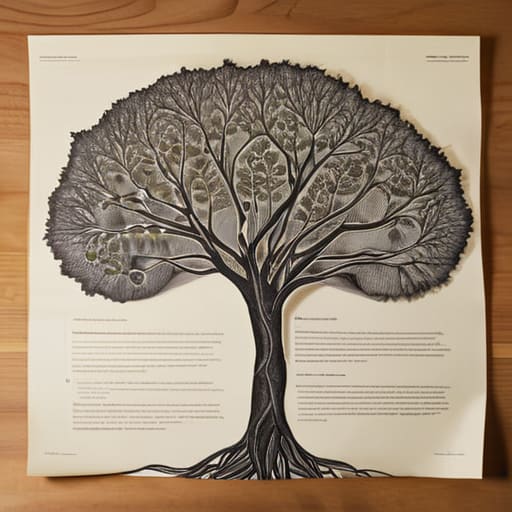
If you are still staring at a long, vertical list of words and trying to force them into your brain, please stop. That is not how we build a functional vocabulary. Instead, I want you to try semantic mapping for word acquisition. Think of it like a web rather than a ladder. If your topic is “The Environment,” don’t just write down pollution. Start with a central bubble and branch out: one branch for causes (emissions, deforestation), one for effects (climate change, biodiversity loss), and one for solutions (renewable energy, legislation).
This isn’t just a fancy drawing exercise; it is one of the most effective contextual vocabulary learning techniques I have ever seen work in a classroom. When you see how words relate to one another spatially, your brain stops treating them as isolated definitions and starts seeing them as a system. This is exactly how you begin improving lexical range in specific domains. When the exam question asks about environmental impact, you won’t be hunting for a single word; you’ll be pulling an entire interconnected web of language from your memory.
Five Ways to Stop Memorizing and Start Owning Your Vocabulary
- Stop collecting “pretty” words. I see students spend hours learning sophisticated adjectives they’ll never actually use in a sentence. If you can’t use a word in a context relevant to the exam task, it’s dead weight. Focus on the high-frequency terms that actually move the needle on your score.
- Learn the “collocation partners” immediately. There is no point in knowing the word ‘mitigate’ if you don’t know it almost always travels with ‘risk’ or ‘impact.’ If you learn words in isolation, you’ll end up with “correct” words in “incorrect” combinations—and that is exactly where the marks slip away.
- Use the “Active Recall” test, not just re-reading. Reading over your notes feels like studying, but it’s a trap; it’s just making you feel familiar with the text. Close the book, grab a scrap of paper, and force your brain to produce the word from scratch. If you can’t produce it under pressure, you haven’t learned it yet.
- Prioritize word families over single words. Instead of just learning ‘analyze,’ learn ‘analysis’ and ‘analytical.’ In the exam, you might know the verb but freeze when you need the noun. If you learn the whole family at once, you’re building a toolkit rather than just a single tool.
- Connect new words to your own life. My students find that if they try to make a sentence about a generic “global issue,” they forget the word five minutes later. If you link a new term to a real opinion you hold or a personal experience, your brain treats it as information worth keeping, not just a string of letters to be memorized.
Final Thoughts: From Lists to Fluency
We have covered a lot of ground, and I want you to remember that the goal here isn’t to become a walking dictionary. It is about efficiency. By moving away from those endless, soul-crushing lists and instead embracing thematic word grouping and semantic mapping, you are training your brain to see the connections that examiners are actually looking for. You aren’t just memorizing isolated fragments; you are building a web of language that you can actually pull from when the pressure is on in the exam room. Stop trying to swallow the whole ocean and start focusing on these structured, meaningful clusters.
I know how exhausting this process feels, especially when you feel like you’ve hit a plateau. I’ve sat across from hundreds of students who felt exactly the same way, but I promise you, consistency beats intensity every single time. Don’t let the fear of making a mistake stop you from using the new words you’ve learned. Even if you stumble, you are building the very habits that will eventually lead to those higher marks. Keep practicing your maps, keep grouping your terms, and most importantly, trust the process. You are much closer to that target score than you think.
Frequently Asked Questions
I understand how to group words, but how do I know if I'm actually learning the words that will show up on the exam versus just learning random vocabulary?
That is the million-dollar question, isn’t it? I see students drowning in “advanced” words that no examiner actually wants to see. Here is my rule: look at the past three years of official practice papers. If you are studying “Environment,” don’t just learn flora and fauna; look for how they use words like sustainability or depletion. If the word doesn’t appear in a sample prompt or a model essay, leave it for later. Stick to the high-frequency patterns.
If I use semantic mapping, how long should I spend on one topic before I move on to the next one?
Don’t get stuck in “mapping paralysis.” I see students spend three days perfecting a beautiful diagram only to realize they haven’t actually practiced the words in a sentence. Aim for three to four focused sessions per topic. Use one session to build the map, two to practice using the words in context, and one for a quick review. Once you can use the core terms without hesitation, move on. Depth is good, but momentum is better.
Is it better to focus on learning a huge number of simple words or a smaller number of more advanced, "high-level" words for my vocabulary lists?
Go for quality, not quantity. I see students every day trying to cram five hundred “big” words into their heads, only to use them incorrectly in an essay. That’s a one-way ticket to a lower score. It is far better to master fifty high-level, precise words—and actually know how to use them in a sentence—than to sprinkle a hundred simple words with errors. Precision wins marks; volume just creates mistakes.
