I was sitting in a cramped, dimly lit classroom in Johannesburg last Tuesday, watching a student stare at his final essay with a look of pure, exhausted defeat. He had the ideas; he had the vocabulary; but he had also just bled points on the same three subject-verb agreement errors I’ve seen more than fifty times. It’s a heartbreaking sight because most students think that learning how to edit your own writing means searching for “sophisticated” vocabulary or complex sentence structures. They spend hours trying to sound academic, while the real examiners are busy docking marks for the basic, repetitive habits that scream unpolished.
I am not here to give you a list of vague, poetic suggestions about “finding your voice.” My approach is much more clinical and, frankly, much more effective. I am going to show you how to stop the hemorrhage by focusing on the specific, predictable patterns that fail exam candidates every single day. We are going to treat your editing process like a checklist of habits, not a creative whim, so you can finally stop losing marks to mistakes you already know how to fix.
Table of Contents
The Self Editing Workflow That Saves Your Grade

You cannot simply look at your essay once and expect it to be perfect. If you try to fix everything at once, you will miss the forest for the trees. I always tell my students that they need a formal self-editing workflow to separate the big ideas from the tiny typos. Start with a macro view: look at your argument and your paragraph development first. Once the logic is sound, only then should you zoom in to look at the mechanics.
Once the structure is solid, move into the micro phase. This is where you tackle improving sentence structure and tightening your prose. I find that many students lose marks simply because they are too “chatty” or repetitive. To catch this, try reading aloud for flow. When you speak the words, your ears will often catch a clunky phrase or a missing preposition that your eyes skipped over. It forces you to slow down and actually hear the rhythm of your English, which is often where the most expensive mistakes are hiding.
Eliminating Wordiness Before It Costs You Points
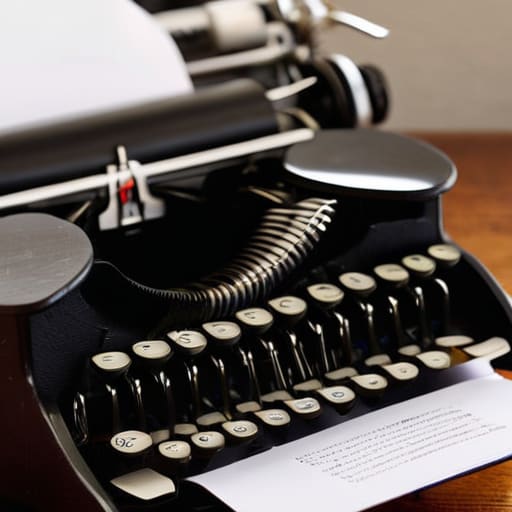
I see it in almost every essay: the “padding” phase. Students often think that using more words makes them sound more academic, but in reality, they are just burying their actual meaning under a mountain of fluff. If you find yourself writing “due to the fact that” instead of “because,” or “in spite of the fact that” instead of “although,” you are simply wasting your precious word count. Eliminating wordiness isn’t about making your writing simple; it’s about making it precise. Every unnecessary syllable is a distraction that pulls the examiner’s focus away from your argument.
When you are refining your draft, you must distinguish between proofreading vs editing. While proofreading catches the typos, editing is where you tackle the bloated sentences. A great way to spot these is through reading aloud for flow. If you find yourself gasping for air before you reach the end of a sentence, it’s too long. Cut the filler, strip away the redundant adjectives, and let your core ideas breathe. Remember, an examiner isn’t looking for how much you can write, but how much you can actually communicate.
Five Precision Checks to Stop the Mark Bleed
- Read your work aloud—and I mean actually out loud. Your eyes are trained to skip over missing articles or repeated words because your brain knows what you meant to write. Your ears, however, aren’t fooled by your intentions; they will catch that awkward phrasing or that missing “the” that disrupts your rhythm.
- Hunt for your “Personal Demons.” In my nineteen years of teaching, I’ve learned that every student has a recurring error—be it subject-verb agreement or a misplaced comma. Don’t just proofread generally; look specifically for the three mistakes you know you make every single time.
- Check your tense consistency like a hawk. I see it constantly in exam essays: a student starts in the past tense, wanders into the present, and ends up in a linguistic muddle. Pick a temporal lane and stay in it; examiners view tense shifts as a lack of control, not a stylistic choice.
- Verify your “high-level” vocabulary. It is a common trap to use a sophisticated word incorrectly just to impress the examiner. If you aren’t 100% certain of the collocation—the words that naturally sit next to it—stick to the simpler, correct version. A simple, accurate word earns more marks than a complex, misused one.
- Audit your punctuation for clarity, not just decoration. A semicolon is a powerful tool, but if you use it incorrectly, it breaks the flow of your argument. Ensure every piece of punctuation is doing a job, rather than just sitting there to look “academic.”
The Final Polish
We have covered a lot of ground today, from building a disciplined self-editing workflow to stripping away the wordiness that clutters your arguments. Remember, editing isn’t just about catching a stray comma; it is about the systematic removal of the errors that I see on my list day after day. If you follow the workflow we discussed, you stop being a passive writer and start being an active editor. You must treat your first draft as raw material, not a finished product. By focusing on precision over volume and applying these structural checks, you ensure that your ideas aren’t buried under a mountain of unnecessary fluff.
I know that sitting for these exams feels like a mountain to climb, and the pressure to be perfect can be overwhelming. But please, hear me when I say this: excellence in exam English is not about being a genius; it is about mastering your habits. Every time you catch a repetitive error or prune a bloated sentence, you are training your brain to think with more clarity. You have the tools, and you have the intellect. Now, you simply need the discipline to use them. Go back to your drafts, look them with fresh eyes, and claim the marks you deserve.
Frequently Asked Questions
How much time should I actually spend on editing versus writing the first draft?
If you’re spending eighty percent of your time drafting, you’re setting yourself up for failure. In my nineteen years of teaching, I’ve seen brilliant ideas ruined by sloppy execution because the student rushed the finish line. Aim for a 60/40 split. Spend sixty percent of your allotted time on the draft, but reserve a full forty percent for editing. You cannot fix a structural collapse while you’re still laying the bricks.
If I've been staring at the same essay for hours, how do I spot my own mistakes without getting "blind" to them?
I call this “the stare-down effect.” When you’ve lived with a sentence for three hours, your brain stops reading what is actually on the page and starts reading what you think you wrote. It’s a dangerous illusion.
Should I be looking for grammar errors and flow issues at the same time, or should I separate them into different passes?
Never try to do both at once. If you’re hunting for a misplaced comma while simultaneously worrying if your argument flows, you’ll end up doing neither well. You’ll miss the structural cracks because you’re too busy squinting at verb tenses. Treat it like choral singing: first, we get the rhythm and phrasing right, then we polish the individual notes. Separate your passes. One for the big picture, one for the technicalities. Don’t multitask your way to a lower grade.
